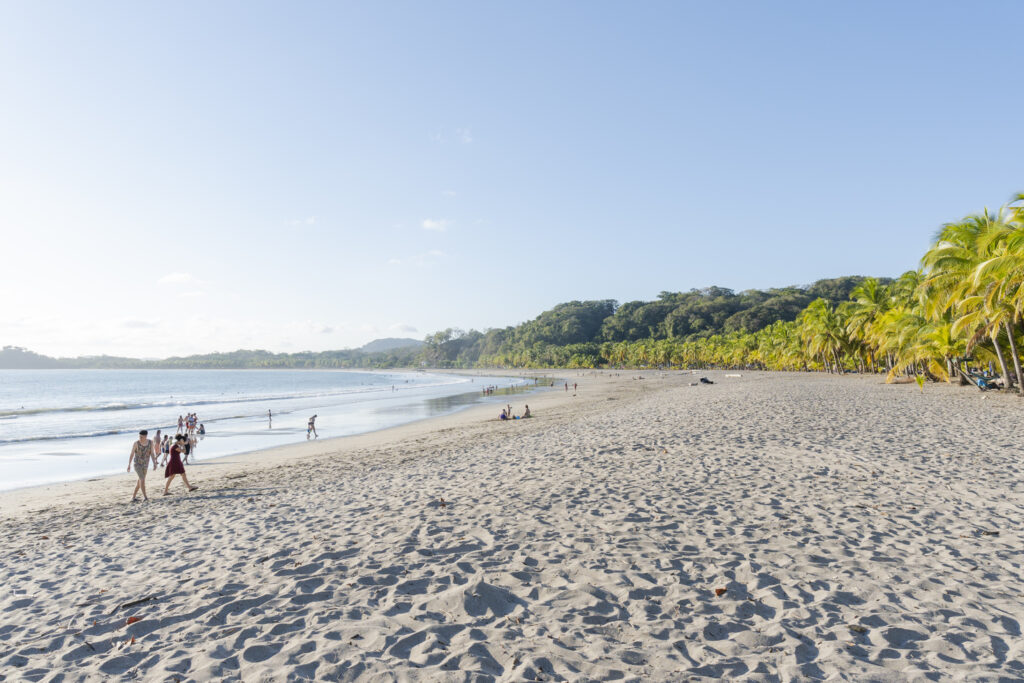
Some places you visit for the beach and discover, almost by accident, that you have arrived somewhere fully alive. Playa Carrillo is one of them. Long before you notice the palm-lined crescent of sand or the aqua water of the bay, you hear it — the low, rolling call of howler monkeys drifting down from the canopy at first light, the flash of scarlet overhead, the rustle in the dry forest just beyond the tree line. This is a coastline where nature was never pushed to the margins. It is the main event.
Tucked into the southern reaches of the Nicoya Peninsula in Guanacaste, Playa Carrillo sits at the meeting point of tropical dry forest, mangrove estuary, and open Pacific — three ecosystems layered on top of one another. The result is one of the most rewarding, and least crowded, wildlife destinations in all of Costa Rica. You do not need to book a distant national park or fight the crowds at a famous reserve. Here, the monkeys, macaws, and sea turtles are practically neighbors.
This guide is your introduction to the wildlife of Playa Carrillo — what you can see, where to see it, and when — from the monkeys in the treetops and the wild scarlet macaws returning to these skies to the sea turtles that come ashore to nest just down the coast.
Why the Guanacaste Coast Is a Wildlife Lover’s Paradise
Costa Rica holds an almost unreasonable share of the planet’s biodiversity — roughly five percent of all known species on a sliver of land smaller than West Virginia. Guanacaste’s contribution to that abundance is its tropical dry forest, one of the most endangered and most wildlife-rich habitats in Central America. Unlike the dense rainforest of the country’s south, the dry forest thins and opens through the year, which makes its animals far easier to spot: monkeys stand out against bare branches, birds gather at the trees still in fruit, and movement carries across the open understory.
Around Playa Carrillo, that forest runs right down to the sea and folds into mangrove wetlands and river estuaries before giving way to the bay. Each of those habitats supports its own cast of creatures, and the corridors between them mean animals move freely through the whole landscape. Add the fact that this stretch of coast has been deliberately protected from high-rise and high-density development — the same restraint that keeps the beaches uncrowded keeps the habitat intact — and you have a rare thing: a luxury coastline where the wildlife never had to leave.
It is no coincidence that this is also the heart of the Nicoya Peninsula Blue Zone, one of only five places on earth where people live measurably longer, healthier lives. A landscape healthy enough for thriving wildlife tends to be a landscape healthy enough for thriving people.
Monkeys: Howlers and Capuchins in the Treetops
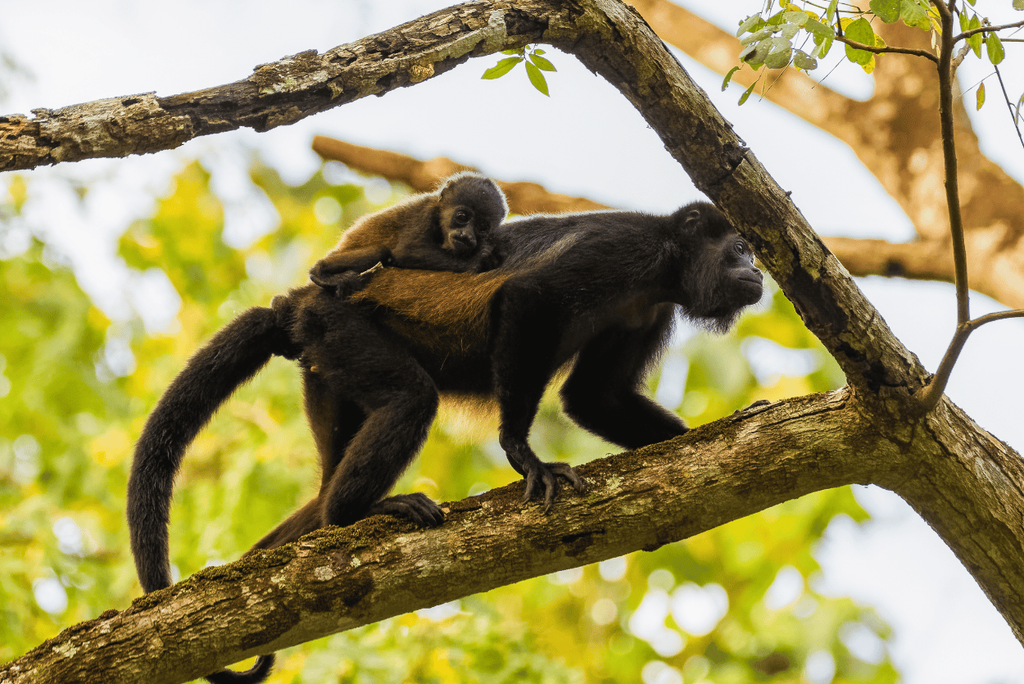
If there is a soundtrack to life on this coast, it belongs to the mantled howler monkey. Their deep, guttural roar — one of the loudest calls of any land animal, carrying for more than a mile — rolls across the treetops at dawn and dusk, and once you have heard it you will never mistake it for anything else. Despite the drama of the sound, howlers are gentle, unhurried vegetarians who spend most of the day lounging in the canopy, and troops are a common sight in the forested hills above the bay.
Sharing those same trees are the white-faced capuchins — the small, expressive, black-and-cream monkeys most people picture when they think of Costa Rica. Intelligent and endlessly curious, capuchins travel in active troops, foraging for fruit and insects and watching you with as much interest as you watch them. Together, these two species are the ones truly at home in Guanacaste’s dry forest, and around Playa Carrillo you have an excellent chance of seeing both. (Costa Rica’s other two monkeys — spider and squirrel monkeys — keep to wetter, more remote corners of the country, so a howler-and-capuchin morning is the authentic Nicoya experience.)
The best time to find them is early morning or late afternoon, when they are most active and the light is soft. Often you will not have to look far at all — on this coastline, the canopy above your terrace is as likely a place as any.
Macaws: The Return of the Wild Scarlet Macaw
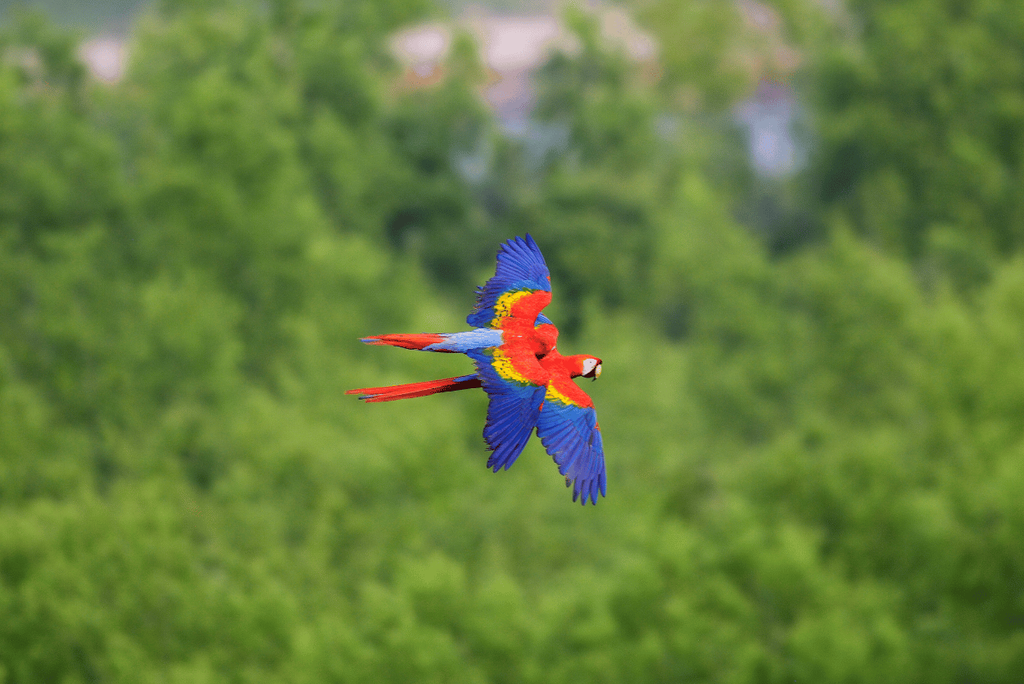
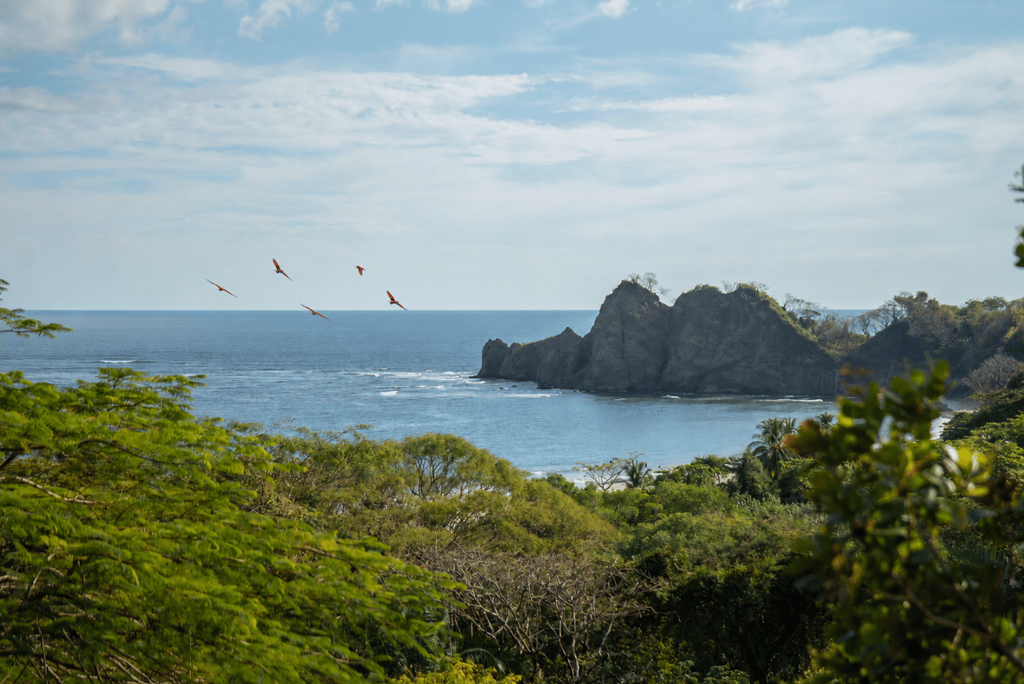
Few sights in nature are as striking as a scarlet macaw in flight — nearly three feet of brilliant red, blue, and gold cutting across a blue sky, calling to its lifelong mate. And few conservation stories are as hopeful as the one unfolding just down the coast from Playa Carrillo.
Scarlet macaws had all but vanished from the Nicoya Peninsula, lost to habitat destruction and the illegal pet trade. Then, near Punta Islita — only a short drive south — the Macaw Recovery Network established a breeding and release program to bring them back. Bird by bird, hand-raised macaws have been released into the surrounding forest, and today a free-flying wild flock soars over the hills and beaches of this coast once more. It is one of the most successful macaw reintroduction efforts in the country, and it means these birds — among the most beautiful on the continent — are once again part of the everyday scenery here.
Visitors can watch the released flock come and go on guided tours at the Punta Islita reserve, typically in the early morning or late afternoon. But you do not always need a tour: increasingly, the reward for simply looking up around Playa Carrillo is a flash of unmistakable scarlet against the green.
Turtles: Nesting Beaches at Camaronal and Beyond
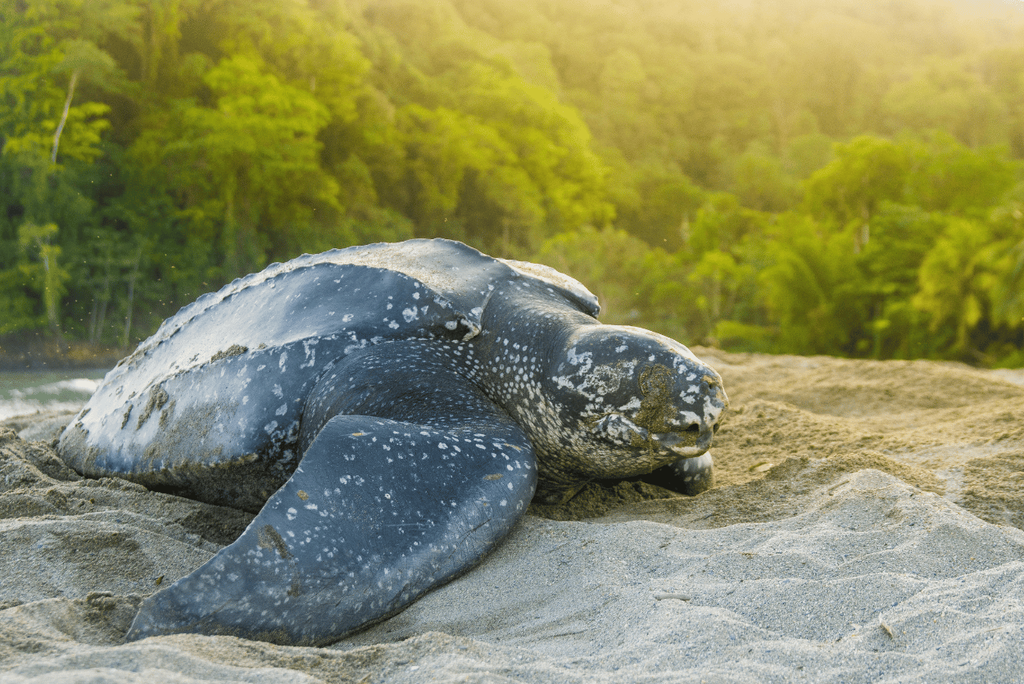
Some of the most moving wildlife encounters on this coast happen after dark, at the water’s edge. Just down the shoreline from Playa Carrillo lies the Camaronal Wildlife Refuge, a protected 234-hectare sanctuary that is one of the most important sea turtle nesting beaches in the region. Four species come ashore here to lay their eggs: olive ridley, leatherback, hawksbill, and Pacific green turtles — including the leatherback, the largest sea turtle on earth.
Under the guidance of the refuge’s rangers and conservation volunteers, visitors can join nighttime tours to witness a female turtle haul herself up the sand and nest, and on most nights the refuge releases newly hatched turtles to make their first scramble to the sea — an experience that stays with people for a lifetime. Nesting occurs year-round but concentrates from roughly May through November, which makes the green-season months a particularly special time to be on this coast.
Camaronal is not alone. The wider Nicoya coast is famous for the arribada — the mass synchronized nesting of thousands of olive ridley turtles — at nearby refuges such as Ostional and Corozalito. Between the protected beach at your doorstep and these renowned nesting sites within reach, Playa Carrillo is one of the finest bases in Costa Rica for anyone drawn to sea turtles. All turtle viewing should be done only with licensed guides and never with flash photography or lights, which disorient nesting females and hatchlings alike.
…and More: The Wider Cast of Characters
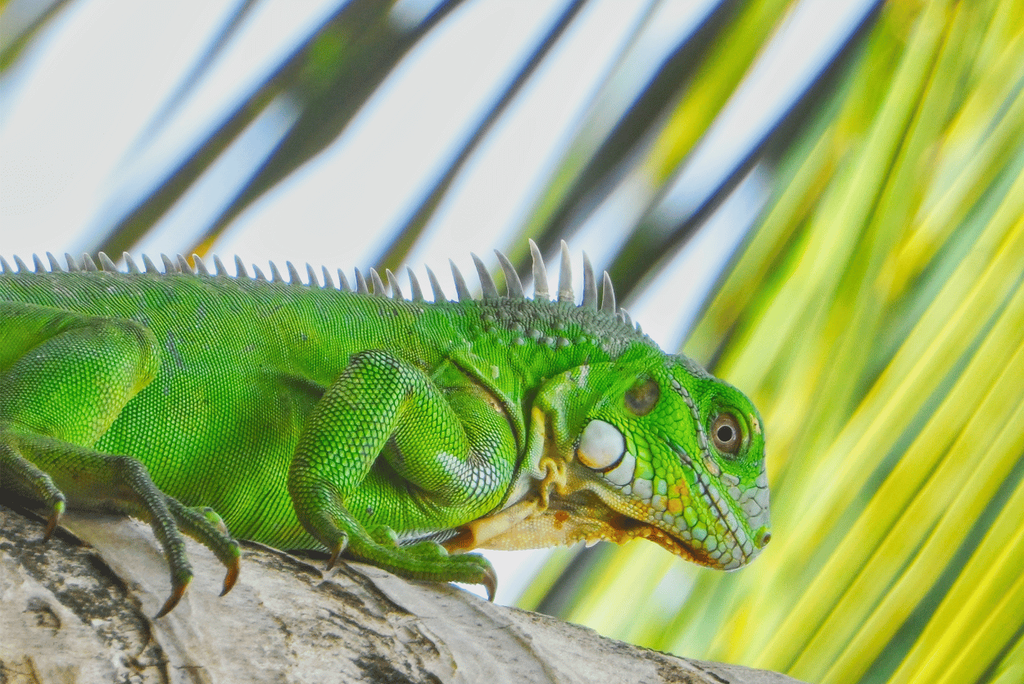
Monkeys, macaws, and turtles may headline the show, but the supporting cast is every bit as memorable. On the forest floor and in the branches you will find white-nosed coatis foraging in family bands, agoutis darting through the undergrowth, green iguanas basking in the sun, and, if you are lucky, an anteater or armadillo going about its business. White-tailed deer move through the dry forest, and the mangrove estuaries and river mouths shelter their own quiet residents, crocodiles among them — a good reason to admire the wetlands from a respectful distance.
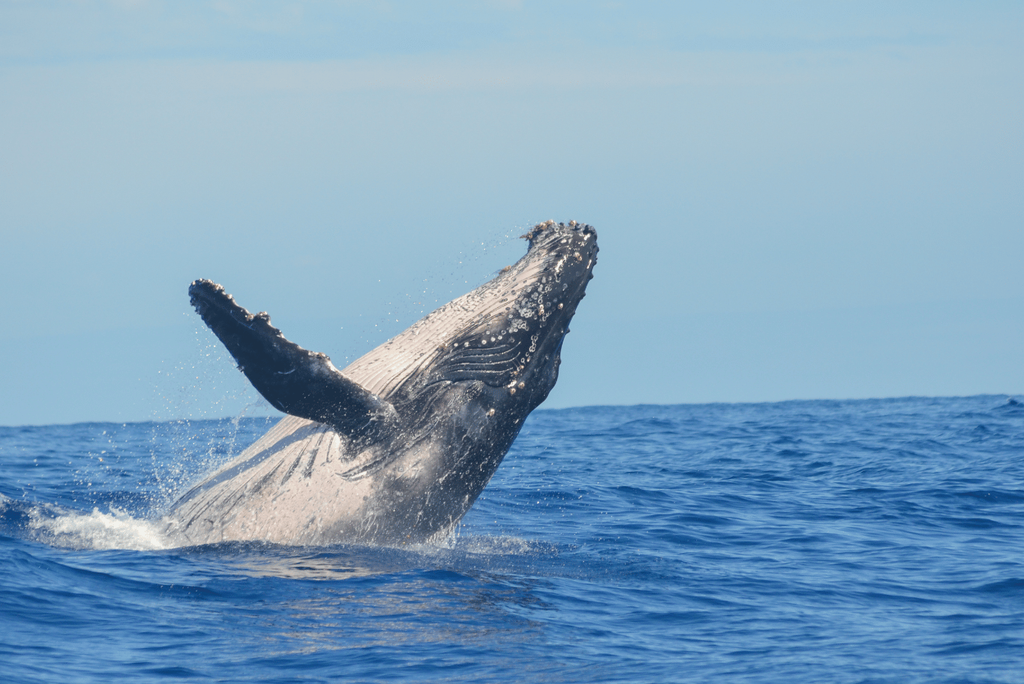
For birders, this coast is a genuine treasure. The white-throated magpie-jay, with its jaunty curved crest, is the unofficial emblem of Guanacaste and a constant, charismatic companion. Flocks of parrots and parakeets chatter through the canopy, toucans and collared aracaris turn up at fruiting trees, turquoise-browed motmots flash their pendulum tails, and herons and shorebirds work the estuary edges. Offshore, the Pacific has its own spectacle: humpback whales pass along this coast during migration season, and dolphins and rays are frequent companions to any boat trip out of the bay.
When and How to See Wildlife Near Playa Carrillo
The rhythm of wildlife here follows the sun and the seasons. Dawn and dusk are the golden hours — monkeys and birds are most active, the heat is gentle, and the light is at its best. The green season (roughly May through November), when brief afternoon rains turn the dry forest lush and green, is also peak turtle-nesting season and a wonderfully alive — and quiet — time to visit.
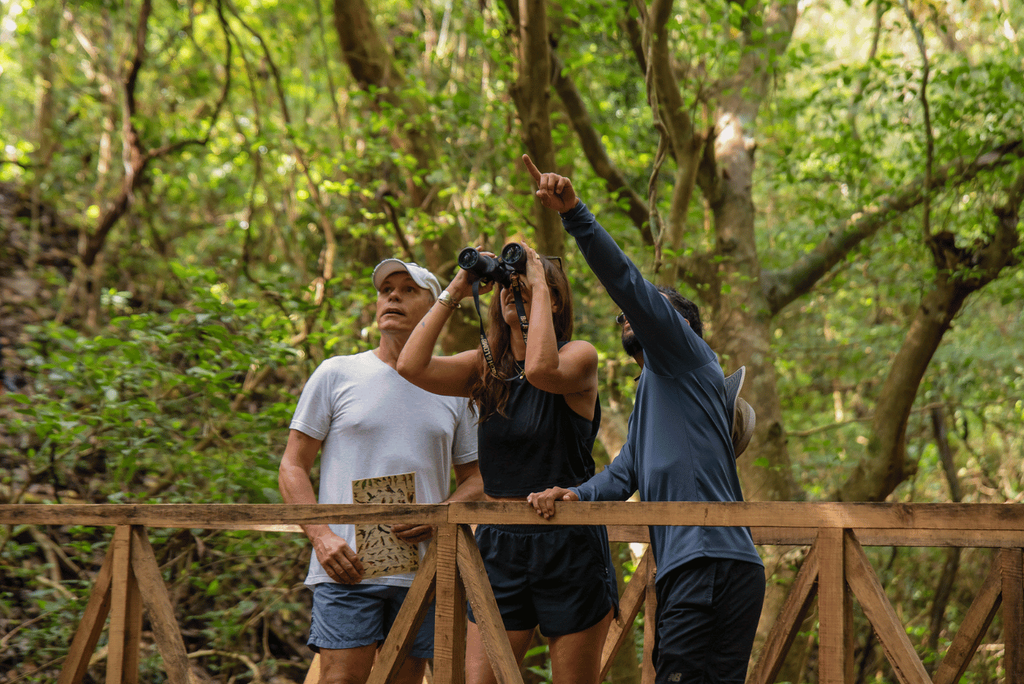
You can experience much of this on your own, simply by walking the forest trails at first light or watching the canopy from a terrace. For the rest, a handful of exceptional guided experiences sit within easy reach: night turtle tours at Camaronal, the scarlet macaw reserve near Punta Islita, boat and kayak trips through the mangroves and estuaries, and the caves and dry-forest wildlife of nearby Barra Honda National Park. Whichever you choose, a good local guide will show you far more than you would ever find alone. For more ways to explore the outdoors here, see our guide to adventure and outdoor life at Ventanas del Mar.
Living Among the Wildlife: Ventanas del Mar at Playa Carrillo
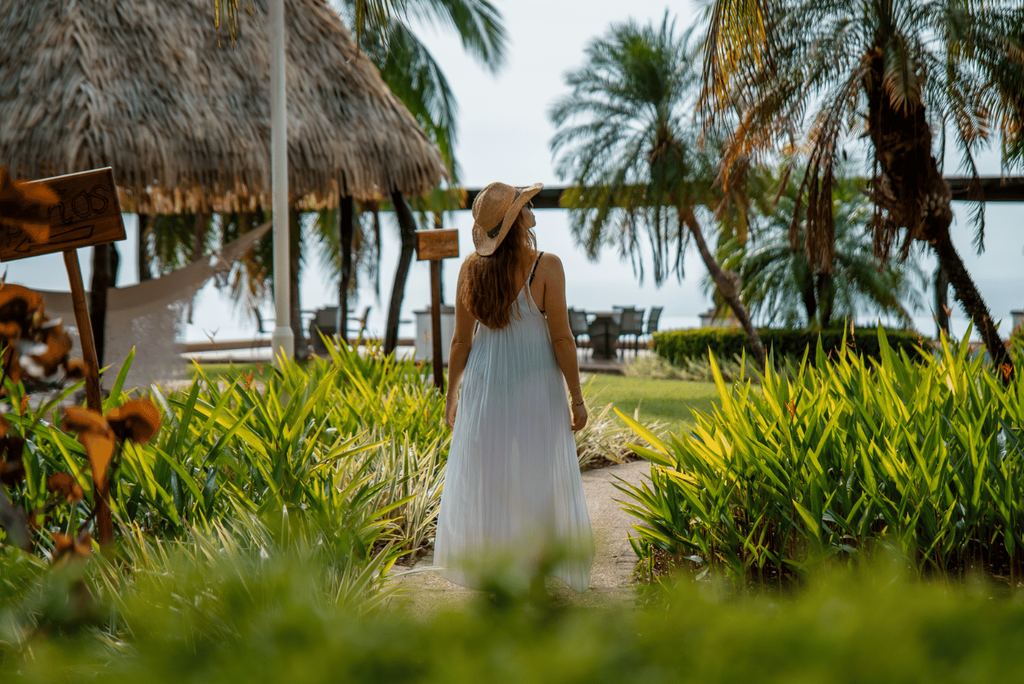
There is a difference between visiting this wildlife and waking up inside it.
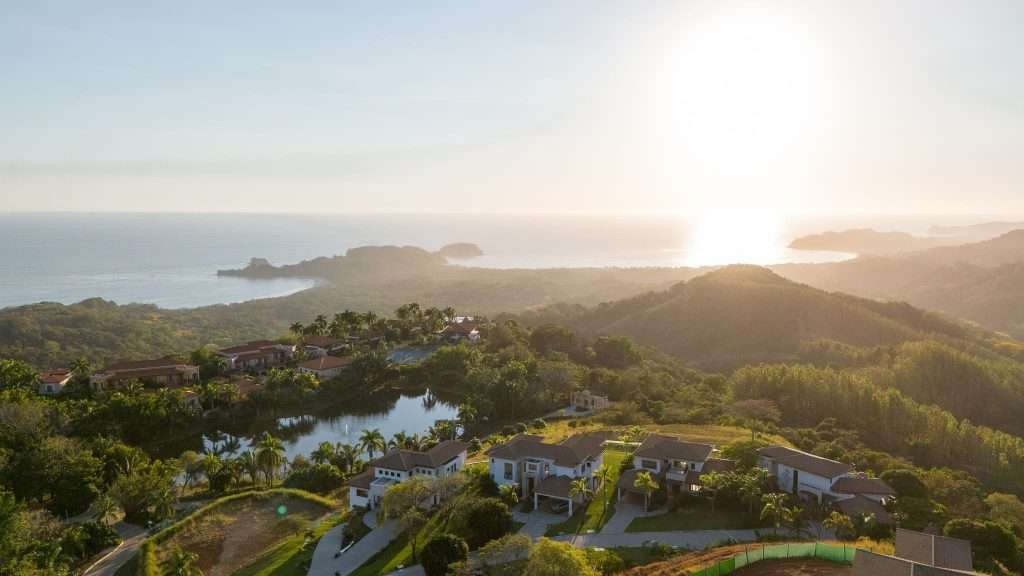
Ventanas del Mar is the only master-planned, low-density luxury gated community at Playa Carrillo, spread across more than 620 hectares of preserved forest, jungle trails, and ocean-view hillside directly above the bay. That scale is the whole point: the community was designed around the land rather than on top of it, keeping the forest, the wildlife corridors, and the habitat intact. Here, howler monkeys are your morning alarm, scarlet macaws cross your view on the way to the water, and the jungle trails outside your door lead into the same forest described throughout this guide. And when you trade the forest for the shore, Playa Carrillo anchors some of the best family-friendly beaches in Guanacaste.
Ownership spans turnkey ocean-view condos, fully finished luxury homes, and custom estate lots for those who want to design their own — all within a thoughtfully planned community with 24/7 security, world-class amenities, and on-site property management that makes ownership effortless. It is nature-integrated living in the truest sense: a refined, private coastal home where Costa Rica’s extraordinary wildlife is not a day trip, but a neighbor. Whether you are here full-time, seasonally, or renting your home as a luxury vacation property, the wild beauty of the Nicoya coast comes with the address.
Explore Playa Carrillo real estate at Ventanas del Mar to see current listings and start a conversation with our team.
FAQs: Wildlife in Playa Carrillo, Costa Rica
What wildlife can you see in Playa Carrillo, Costa Rica?
Playa Carrillo and the surrounding Nicoya Peninsula are home to mantled howler monkeys and white-faced capuchins, wild scarlet macaws, four species of nesting sea turtles, and a rich supporting cast — white-nosed coatis, iguanas, agoutis, crocodiles in the estuaries, and abundant birdlife including the white-throated magpie-jay, toucans, parrots, and motmots. Humpback whales and dolphins pass offshore. The area’s mix of tropical dry forest, mangroves, and coastline makes it one of Costa Rica’s most rewarding and least crowded wildlife destinations.
What kinds of monkeys live near Playa Carrillo?
Two of Costa Rica’s four monkey species are at home in the dry forest around Playa Carrillo: the mantled howler monkey, famous for its far-carrying dawn call, and the white-faced capuchin, the intelligent and curious black-and-cream monkey. Costa Rica’s other two species, spider and squirrel monkeys, live in wetter, more remote regions and are not typically found on this part of the Nicoya Peninsula.
Can you see wild scarlet macaws in the Nicoya Peninsula?
Yes. Thanks to a breeding and release program run by the Macaw Recovery Network near Punta Islita, just south of Playa Carrillo, a free-flying wild flock of scarlet macaws has been reestablished on this coast after the species had nearly disappeared. Visitors can see the released flock on guided tours at the reserve, and macaws are increasingly spotted flying over the surrounding hills and beaches.
Where can you see sea turtles nesting near Playa Carrillo?
The Camaronal Wildlife Refuge, just down the coast from Playa Carrillo, is one of the region’s most important nesting beaches, hosting olive ridley, leatherback, hawksbill, and Pacific green turtles. Licensed guides lead night tours to see nesting turtles, and the refuge releases hatchlings on most nights. Nearby Ostional and Corozalito are known for the arribada, the mass synchronized nesting of thousands of olive ridley turtles.
When is the best time to see wildlife in Guanacaste?
Dawn and dusk are the best times of day, when monkeys and birds are most active. The green season, roughly May through November, brings lush forest and coincides with peak sea turtle nesting, making it an especially rewarding — and quieter — time to visit. Wildlife can be seen year-round, but early mornings reward you most.
When is sea turtle nesting season in Costa Rica’s Nicoya Peninsula?
At Camaronal and along the southern Nicoya coast, sea turtles nest year-round, but nesting concentrates from roughly May through November. Olive ridley arribadas at nearby refuges such as Ostional and Corozalito also peak during the green-season months. Always view nesting turtles with a licensed guide and without flash or artificial light.
Is it safe and responsible to view wildlife near Playa Carrillo?
Yes, when done responsibly. Never feed wild animals, keep a respectful distance, and use licensed local guides for turtle nesting tours, mangrove trips, and forest walks. Avoid flash photography around turtles, and admire crocodile habitat in the estuaries from a safe distance. Responsible viewing protects both you and the animals — and makes for far better encounters.
Can you live somewhere with this wildlife at Playa Carrillo?
Yes. Ventanas del Mar is a master-planned, low-density luxury gated community set across more than 620 hectares of preserved forest and ocean-view hillside directly above Playa Carrillo. Designed around the land to keep habitat and wildlife corridors intact, it offers ocean-view condos, finished luxury homes, and custom home sites with 24/7 security and on-site management — a rare chance to make Costa Rica’s wildlife your everyday neighbor.