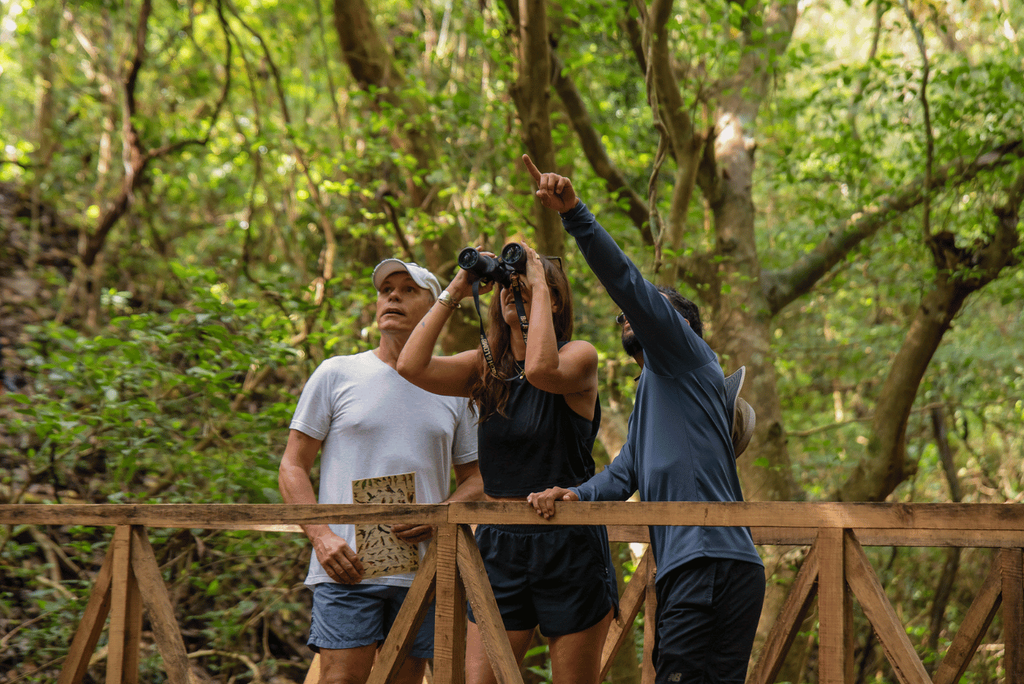

For many people, the dream of owning property in Costa Rica begins with a visit — a morning on a quiet beach, a sunset from an oceanview terrace, a week that stretches into a feeling: this is where I want to be.
What follows is the practical question: how does buying real estate in Costa Rica actually work?
The good news is that Costa Rica has long welcomed foreign buyers. The legal framework is clear, the property rights are real, and the process — while different from what you may know at home — is straightforward when approached with the right guidance.
This guide is designed to give you an honest, clear-eyed overview of buying real estate in Costa Rica as a foreigner. It is not legal advice, and we always recommend working with a qualified Costa Rican attorney before moving forward with any transaction. But it is a solid foundation — an introduction to what to expect, what to watch for, and what makes buying here a genuinely sound decision.
Can Foreigners Own Property in Costa Rica?

The answer is yes — and without restriction.
Costa Rica’s constitution grants foreign nationals the same property ownership rights as citizens. You do not need residency. You do not need a local partner. And there are no caps on how much property a foreigner can own.
This openness is one of the foundations of Costa Rica’s strong real estate market, and part of what draws buyers from across North America, Europe, and beyond to consider buying a home in Costa Rica. It is also why communities like Ventanas del Mar — the only master-planned, low-density luxury community at Playa Carrillo — have been able to attract discerning international buyers who trust in the security of their investment.
For those exploring luxury real estate in Costa Rica, the legal clarity is reassuring. Ownership is real, rights are protected, and the National Registry (Registro Nacional) maintains a transparent public record of every titled property in the country. Buying here is not a leap of faith — it is a well-established process with clear legal protections at every step.
Understanding Property Types in Costa Rica

Before beginning your search, it’s important to understand that not all property in Costa Rica carries the same title structure. Knowing the difference helps you ask the right questions and set the right expectations from the start.
Fee Simple / Titled Property
Fee simple property — also called titled property — is fully registered in Costa Rica’s National Registry and transfers complete ownership rights to the buyer. You hold clear title. You can sell, rent, develop, or pass the property to your heirs without restriction. It is the most familiar structure for international buyers and the most straightforward to finance, insure, and transfer.
Maritime Zone / Concession Property
Costa Rica’s Maritime Zone Law governs land within 200 meters of the mean high tide line. The first 50 meters are public domain. The next 150 meters form the restricted zone, where land is typically held through a municipal concession rather than sold outright — though exceptions exist, and fee simple titled property within this zone is recognized under Costa Rican law.
Concession property comes with meaningful restrictions for foreign buyers — including residency requirements and rules around corporate ownership — that make it more complex than fee simple title. Rules also vary by municipality and require periodic renewal.
Whether you’re evaluating fee simple or concession property, the most important step is the same: engage a qualified Costa Rican real estate attorney early, confirm the title structure, and understand exactly what you’re acquiring before signing anything.
The Buying Process: Step by Step
Buying property in Costa Rica follows a clear sequence, though it differs in important ways from transactions in the U.S., Canada, or Europe. Here is what to expect.
1. Define Your Goals and Budget
Before anything else, get clear on what you’re looking for. Are you buying a primary residence, a vacation retreat, or an investment property? Will you rent it out when you’re away? Are you paying cash or exploring financing options?
These answers shape everything that follows — from the type of property you target to how it’s structured legally and how you plan for the future.
2. Work with a Reputable Real Estate Professional
Costa Rica’s real estate market is not formally regulated the way North American markets are, which makes working with a trusted, experienced professional more important, not less. A knowledgeable agent familiar with the local market — especially in areas like Playa Carrillo and Guanacaste — can help you identify the right property and navigate the nuances of the buying process.
At Ventanas del Mar, our team works closely with buyers to match their lifestyle goals with the right home or lot, from ocean-view condos to custom luxury homes with sweeping Pacific views.
3. Engage a Costa Rican Attorney — Before Anything Else
This step is non-negotiable. A qualified local attorney — who also functions as a notary public under Costa Rican law — is essential to a safe transaction. Your attorney will conduct title searches, identify any liens or encumbrances, verify the seller’s authority to sell, review all contracts, and ultimately execute the closing deed.
Do not sign a purchase agreement or transfer any funds before your attorney has reviewed the transaction. This single step protects everything that comes after it.
If you’re exploring ownership at Ventanas del Mar and don’t yet have legal representation in Costa Rica, our team can connect you with qualified local attorneys we trust and work with regularly.
4. Conduct Due Diligence
Your attorney will carry out a thorough review of the property before closing. This typically includes:
- Title search at the National Registry to confirm clean, unencumbered ownership
- Survey review (plano catastrado) to verify property boundaries and confirm there are no encroachments
- Lien and encumbrance search to confirm the property is free of debts or legal holds
- Zoning and environmental review to confirm the intended use is permitted under local and national regulations
- Utility and tax status to confirm no outstanding obligations are attached to the property
Due diligence typically takes two to four weeks, depending on the complexity of the property.
5. Sign a Purchase-Sale Agreement
Once due diligence is complete and both parties are ready to move forward, you’ll sign a purchase-sale agreement (commonly called a contrato de opción de compra or promissory contract). This document outlines the agreed purchase price, deposit amount, conditions of sale, and closing timeline.
A deposit is paid at this stage and held in escrow until closing.
6. Close and Transfer Title
At closing, your attorney prepares and executes a public deed (escritura pública) that formally transfers ownership from seller to buyer. This deed is then registered with the National Registry, officially recording you as the new owner of record.
Purchasing Through a Corporation

Many foreign buyers in Costa Rica choose to hold their property through a locally formed corporation — most commonly a Sociedad Anónima (S.A.) or a Sociedad de Responsabilidad Limitada (S.R.L.).
A corporate structure can offer several potential advantages: liability protection that separates the property from your personal assets, simplified estate transfer (shares transfer rather than re-registering title), and in some cases, greater ease in a future sale. It may also carry tax implications depending on your country of residence.
Whether a corporate structure is right for your situation depends on your individual circumstances. Your Costa Rican attorney and, ideally, a tax advisor familiar with cross-border transactions, can help you make an informed decision before closing.
Financing Your Costa Rica Property

Historically, most foreign buyers purchased Costa Rican property in cash. Local banks were often slow to extend mortgages to non-residents, and the process could be cumbersome and document-intensive. That has changed significantly.
Today, those investing in Costa Rica real estate have several meaningful financing paths available to them.
U.S.-Based International Lenders
Through partnerships like the one between Ventanas del Mar and Volo Loans, qualified U.S. citizens and permanent residents can now access 30-year mortgage structures, competitive rates, and familiar U.S.-based loan servicing — all without requiring Costa Rican residency. These programs offer up to 75% loan-to-value on completed homes, with no prepayment penalties and closing timelines of as little as 30 days. It is one of the more significant recent developments for international buyers exploring luxury real estate investment in Costa Rica.
Costa Rican Bank Financing
Several local banks — including Banco BCT, Scotiabank Costa Rica, and Banco LAFISE — now offer mortgage products to foreign buyers. Down payments typically range from 30% to 50%, with terms of 15 to 30 years. The process is more document-intensive and moves more slowly than U.S.-based options, but it remains a viable path for qualified buyers, particularly those who already hold Costa Rican residency.
Home-Country Financing
Some buyers leverage equity from their primary residence — through home equity loans or lines of credit — to fund a Costa Rican purchase as a cash buyer. This approach can simplify the local transaction considerably and strengthen your negotiating position.
For buyers exploring turnkey vacation rentals in Playa Carrillo or long-term investment properties in Guanacaste, understanding which financing structure best supports your goals is part of the early planning process. Our team at Ventanas del Mar can connect you with vetted partners and walk you through the options available based on your profile.
Costs and Fees to Expect
Beyond the purchase price, buyers should budget for the following closing costs, which vary slightly depending on how the transaction is structured.
For a direct ownership transfer, where title passes from seller to buyer:
- Transfer tax: 1.5% of the sale price
- Registration fees: approximately 0.8% of the sale price
- Notary fees: 1% of the sale price (plus 13% VAT)
For a share transfer, where the buyer acquires the corporation that holds the property:
- Indirect transfer tax: 1.5% of the sale price
- Notary fees: 1% of the sale price (plus 13% VAT)
In total, buyers typically plan for 3–4% of the purchase price in closing costs for a direct transfer, and somewhat less for a share transfer. Your attorney can walk you through which structure applies to your transaction and what to budget accordingly.
Annual property taxes in Costa Rica are just 0.25% of the municipally assessed property value — among the lowest of any real estate market in the world, and one of the notable tax benefits that attract international buyers and retirees to Costa Rica year after year.
Buyers of higher-value residential properties should also be aware of the Impuesto Solidario (Solidarity Tax for Housing), a separate annual tax that applies to residential properties whose constructed value exceeds approximately $715,000 USD (a threshold adjusted annually for inflation). The Impuesto Solidario uses a progressive rate structure, beginning at 0.25% and rising to 0.55% for the highest-value properties. Your attorney or tax advisor can advise whether it applies to your transaction.
Costa Rica also operates under a territorial tax system, meaning that most foreign-sourced income — such as U.S. pensions, Social Security, or retirement withdrawals — is generally not taxed locally.
Note: Tax laws are subject to change, and individual circumstances vary. We recommend consulting a qualified tax advisor in both your home country and Costa Rica before making any financial decisions.
Why Playa Carrillo — and Ventanas del Mar — For Your Investment
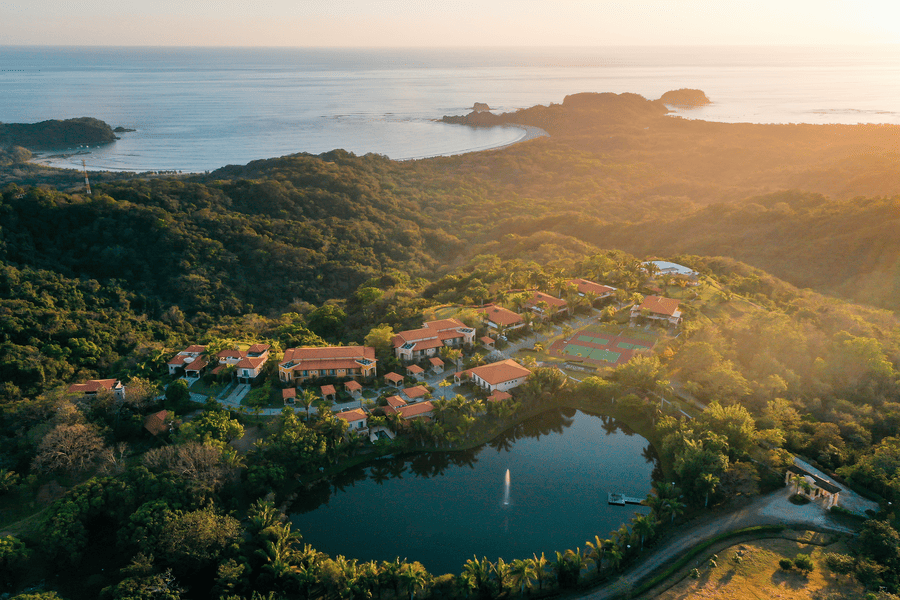
Understanding the process is one part of the decision. Choosing where to invest is the other.
Playa Carrillo sits at the geographical center of Costa Rica’s Nicoya Peninsula Blue Zone — one of only five regions in the world where people live measurably longer, healthier lives. It is a protected coastline: no high-rises, no overdevelopment, and a clear community commitment to preserving the character of the bay for future generations.
Ventanas del Mar is the only master-planned luxury gated community in Playa Carrillo. Spread across more than 620 hectares of preserved forest, jungle trails, and ocean-view hillside, the community offers a range of ownership opportunities — from turnkey ocean-view condos and fully finished luxury homes to custom pre-construction sites where the canvas is entirely yours. All properties are positioned within a thoughtfully designed community with 24/7 security, world-class amenities, and on-site property management services that make ownership effortless, whether you’re here full-time or seasonally.
For those buying a home in Costa Rica — whether as a retirement property, a high-performing vacation rental, or a long-term estate investment — Playa Carrillo and Ventanas del Mar represent something genuinely rare: a protected, low-density coastal setting where lifestyle value and investment fundamentals reinforce each other.
Explore Playa Carrillo real estate at Ventanas del Mar to see current listings and begin a conversation with our team.
A Note on This Guide
The information presented here is intended as a general educational overview of the property buying process in Costa Rica. It is not legal advice, and it should not be relied upon as such. Costa Rica’s real estate laws, tax regulations, and administrative processes are subject to change, and every transaction carries its own specific considerations.
Before purchasing property in Costa Rica, we strongly encourage you to consult with a qualified Costa Rican real estate attorney and, where relevant, a tax advisor in your home country with cross-border experience. Our team at Ventanas del Mar is happy to provide referrals to trusted local professionals we work with regularly.
FAQs: Buying Real Estate in Costa Rica as a Foreigner
Can foreigners buy property in Costa Rica? Yes — and without restriction. Costa Rica’s constitution grants foreign nationals the same real property rights as citizens. Foreigners can own, sell, lease, or develop titled property in their own name, without requiring residency, a local partner, or a special permit. There is no cap on how much property a foreigner can own, and no category of titled real estate that is off-limits to international buyers. Working with a qualified Costa Rican attorney ensures the process is handled correctly from title search to closing.
Do foreigners have the same property rights as Costa Rican citizens? Yes. Costa Rica’s constitution guarantees foreign nationals the same real property rights as citizens. You can own, sell, lease, or develop titled property in your own name, without restriction and without requiring a local partner.
Do I need to be a resident to buy property in Costa Rica? No. Costa Rica does not require residency to purchase or own property. Many international buyers own property here for years before applying for residency — if they choose to do so at all. Residency and ownership are entirely separate processes.
What are the typical closing costs when buying property in Costa Rica? Closing costs vary depending on how the transaction is structured. For a direct ownership transfer, buyers typically budget for a transfer tax (1.5%), registration fees (~0.8%), and notary fees (1%, plus 13% VAT). For a share transfer — where the buyer acquires the corporation that holds the property — costs include an indirect transfer tax (1.5%) and notary fees (1%, plus 13% VAT). In total, buyers generally plan for 3–4% of the purchase price for a direct transfer, and somewhat less for a share transfer. Annual property taxes are just 0.25% of the municipally assessed value — one of the lowest rates of any real estate market in the world.
Is it safe to buy property in Costa Rica as a foreigner? Yes — when approached with proper due diligence and qualified legal representation. Costa Rica has a well-established National Registry and a transparent title system.
Do I need a lawyer to buy property in Costa Rica? Yes, and this is not simply a recommendation — it is a legal requirement. Property transfers in Costa Rica must be executed through a notary public, who is also typically your real estate attorney. Your attorney conducts the title search, prepares the public deed, and registers the transfer. Never purchase property without independent legal representation.
Can I use a corporation to hold my property? Yes, and many buyers do. Costa Rican corporations (Sociedad Anónima or S.R.L.) can hold property and offer potential advantages related to liability protection, estate planning, and future transfers. Whether a corporate structure is right for your situation depends on your personal and financial circumstances — your attorney can advise you.
What financing options are available for foreign buyers? Options have expanded considerably in recent years. They include U.S.-based international lenders such as Volo Loans (a partner of Ventanas del Mar, available to U.S. citizens and permanent residents), select Costa Rican banks, and home-country financing tools such as home equity loans. Cash purchases remain common, but are no longer the only path to ownership.
How long does the buying process take in Costa Rica? From signed purchase agreement to registered title, the process typically takes 30 to 60 days, depending on the complexity of due diligence, the lender involved (if financing), and how quickly documentation is assembled. Your attorney can give you a realistic timeline once the transaction is underway.
What makes Ventanas del Mar a strong investment choice? Ventanas del Mar is the only master-planned, low-density luxury community at Playa Carrillo — a Blue Zone beach town on Costa Rica’s Nicoya Peninsula. The community is gated with 24/7 security, and on-site property management makes ownership seamless whether you’re here full-time, seasonally, or managing the property as a luxury vacation rental. It is a rare combination: genuine lifestyle value in one of Costa Rica’s most protected coastal settings, backed by the fundamentals of a sound long-term investment.